Gum disease is a prevalent yet often underestimated condition. Gum disease in its early stages is typically painless. However, it is a significant concern in oral health that can have a profound impact on overall well-being, in addition to the long-term future of your teeth. Far from being a simple case of bleeding gums, it is a progressive and serious infection that, if left unchecked, can lead to the loss of teeth and affect other systems of the body. The bacteria from the mouth can enter the bloodstream through the leaky, inflamed gums and, in turn, gain access to the vital organs. Understanding the stages of gum disease is the first step toward effective prevention and treatment.
Gum disease, medically known as periodontal disease, is an infection of the tissues that hold your teeth in place. It is primarily caused by plaque/biofilm, a sticky film of bacteria that constantly forms on your teeth. When plaque is not removed effectively through daily brushing and flossing, it hardens into tartar/scale, which can only be removed with a professional dental cleaning. The bacteria in plaque and tartar/scale produce toxins that irritate the gums, leading to inflammation and, over time, a slow but steady destruction of the gum tissue and underlying bone.
The condition typically progresses in stages, with each stage representing a worsening of the infection and an increase in the damage to your oral structures. Early intervention is crucial, as the initial stage is entirely reversible. However, as the disease advances, the damage becomes more difficult to manage and, in some cases, irreversible.
Inflamed gums create bad breath. Bad breath is something that few people will tell you about; they will simply choose to avoid you or keep their distance. A dating study in the UK found that as many as 85% of British adults would not go on a second date with someone who had bad breath.
Bad breath can negatively impact job prospects by creating a poor first impression, lowering confidence and hindering professional communication and opportunity. It can affect how people are perceived in the workplace and, therefore, impact networking and promotion prospects. Bad breath can make the difference between getting a job and not.
Visible scale on your teeth makes them appear yellow or dirty, and this can affect confidence and the ease with which you smile. This can alter the perception of your personality.
Absolutely yes. Some of the most florid gum disease we see is in people in their early to mid-20s. They have moved on to an independent life, are busy establishing their careers and friendships and are no longer encouraged to attend the dentist by their parents. They may not feel they have the budget to prioritise their teeth, and they have no pain. It is vitally important to prevent gum disease when young. The most effective and least expensive way to treat gum disease is to never let it get a hold in the first place through good prevention.
No, tartar/scale will build up around the teeth if not removed from time to time by a skilled hygienist. The source of the scale is the calcium in the saliva. Tartar/scale is a residue which forms as a result of the constant bathing of the teeth in saliva. Saliva helpfully contains antibodies and is a hugely important part of the immune system of the mouth. The calcium content helps remineralise the teeth and reduces acid damage, but the unhelpful by-product is tartar/scale, which will not brush away once formed. If plaque and biofilm are left on the teeth through poor or inconsistent cleaning habits, the scale will form much more quickly
Good daily habits need to be supported by the services of a skilled hygienist.
Gingivitisis the earliest and most common form of gum disease. It is a mild inflammation of the gums caused by the accumulation of plaque/biofilm along the gumline. At this stage, the infection has not yet progressed to affect the bone or connective tissues that support the teeth, making it completely reversible with professional care and improved oral hygiene.
The symptoms of gingivitis can be subtle and pain-free, which is why many people may not realise they have it. Common signs include:
The good news is that gingivitis can be reversed relatively easily. The primary treatment involves:
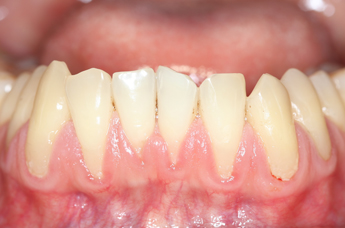
If gingivitis is left untreated, the inflammation and infection will spread from the gums to the underlying bone and supporting structures. This marks the progression to periodontitis, a more serious condition where the damage is no longer easily reversible. As the gums become more inflamed, they begin to pull away from the teeth, creating small spaces known as ‘pockets’. These pockets then become a breeding ground for bacteria, and tenacious scale becomes deposited on the root deep below the surface, where it can fester unnoticed, leading to further bone loss.
The symptoms of periodontitis are more pronounced and often indicate significant damage. They include:
Treatment for periodontitis is more involved than for gingivitis and is aimed at halting the disease’s progression and preventing further bone loss.
Advanced periodontitis is the most severe stage of the disease and can have devastating consequences for your oral health. At this point, the infection has caused extensive damage to the bone and connective tissue that hold your teeth in place. The pockets have deepened significantly, and the teeth have lost their stable support.
The symptoms of advanced periodontitis are impossible to ignore and often include:
Treatment for this advanced stage often requires a combination of deep cleaning and surgical interventions. The goal is to reduce the pocket depth, regenerate lost bone and tissue, and save as many teeth as possible. Treatments may include:
The best way to manage gum disease is to prevent it from ever starting or becoming established. A proactive approach to oral hygiene and regular professional check-ups are the most effective defences.
Gum disease is a serious, progressive condition that can move from a mild, reversible state to a severe and damaging one if not addressed. The key to successful management lies in early detection and appropriate intervention. Recognising the signs of gingivitis and periodontitis and seeking professional dental care promptly can save your teeth and help protect your overall health. If you have noticed any of the symptoms mentioned in this article, we strongly recommend you book an appointment with your dentist and hygienist for a professional assessment and deep clean
Back to treatments