Healthy gums rarely attract much attention, yet they are the foundation of every healthy smile. Most people think about their teeth far more than their gums, but the gums are what hold everything in place. They are often the first part of the mouth to signal that something is wrong. Knowing what healthy gums should look and feel like makes it much easier to spot problems early and far easier to keep your whole mouth in good health.
Healthy gums usually sit somewhere within the pink spectrum, although the exact shade varies from person to person. In people with naturally pigmented skin, healthy gums may also have areas of brown, dark brown or grey pigmentation. This is a completely normal variation caused by melanin and is not a sign of disease. What matters is consistency. The colour should be fairly even across the mouth rather than patchy, with no bright red bands appearing along the edges.
Texture is another good indicator. Healthy gum tissue is firm rather than spongy, and the surface often has a faint stippled appearance, a little like an orange skin. The gums should sit snugly around each tooth, forming a neat scalloped line where the tooth meets the gum. There should be no obvious swelling, no puffiness and no gaps where the tissue has started to pull away from the teeth.
Perhaps the clearest sign of all is what happens when you clean your teeth. Healthy gums do not bleed during normal brushing or cleaning between the teeth. They are not tender to the touch, and your breath stays reasonably fresh throughout the day rather than turning stale by mid-morning. If none of these things gives you cause for concern, the chances are your gums are in good shape.
Gums do far more than frame your smile. They seal the spaces around the roots of your teeth and protect the bone underneath. When that seal breaks down, bacteria can work their way below the gum line and begin to damage the structures that keep teeth anchored. Left untreated, this process can eventually lead to loose teeth and, in some cases, tooth loss. It tends to happen slowly and quietly, which is exactly why recognising the early signs is so important.
There is also a growing body of research linking the condition of the gums to the rest of the body. Ongoing inflammation in the mouth has been associated with heart disease, diabetes and other conditions, although the precise nature of these relationships is still being studied. The sensible conclusion is simple enough: looking after your gums is part of looking after your general health, not a separate concern you can set aside.
Because healthy gums are so consistent, changes tend to stand out once you know what you are looking for. Redness, particularly along the gum line, is often the first thing people notice. Swelling, tenderness and bleeding when brushing usually follow. Persistent bad breath, a lingering unpleasant taste, gums that appear to be shrinking away from the teeth, or teeth that feel slightly loose are all reasons to book an appointment.
These signs should never be written off as normal. Bleeding gums, in particular, are often dismissed because they are so common, but common is not the same as healthy. Healthy gums should not bleed during everyday brushing or cleaning between your teeth. If they do, it is usually a sign of inflammation rather than brushing too hard. The encouraging news is that the earliest stages of gum disease are usually completely reversible with the right care, making it all the more important not to wait and hope the problem settles on its own.
The good news is that keeping healthy gums is mostly down to habits you can build at home, and none of them is complicated.
Brushing twice a day is the cornerstone. Use a soft-bristled brush and a fluoride toothpaste, and brush for a full two minutes so every surface receives attention. Angle the bristles gently towards the gum line, where plaque likes to gather, and let the brush do the work. Scrubbing hard does more harm than good over the years, wearing away both enamel and gum tissue and contributing to gum recession. An electric toothbrush with a pressure sensor can be particularly helpful if you tend to brush too firmly.
Cleaning between the teeth is just as important, and it is the step most people skip. A toothbrush simply cannot reach the surfaces between your teeth, which is where a great deal of plaque builds up. Interdental brushes are often the most effective option for adults, although floss or a water flosser may be better depending on the size of the spaces between your teeth and any dental work you have. The best method is the one you will use consistently every day.
Diet also plays an important role. Frequent sugary snacks and drinks feed the bacteria in plaque, so reducing how often you consume them helps more than many people realise. It is the frequency rather than the total amount that causes the greatest harm, because every sugary snack or drink restarts the acid attack on your teeth and gums. Crunchy fruit and vegetables, plenty of water and a generally balanced diet all support healthy gum tissue.
If you smoke, stopping is one of the single best things you can do for your gums. Smoking reduces blood flow to the gum tissue, masks the early signs of disease by hiding the bleeding that would otherwise alert you, and makes any treatment you need less effective. Vaping is not a clean alternative, and the long-term effects on gum tissue are still being understood, so it should not be relied upon for reassurance.
Finally, see your dentist and hygienist regularly. Rather than following a one-size-fits-all timetable, your dental team will recommend an interval that reflects your individual level of risk. Professional cleaning removes the hardened plaque, known as tartar or calculus, that no amount of brushing at home can remove. Just as importantly, your dental team can identify early changes long before you would notice them yourself, when they are simplest to treat.
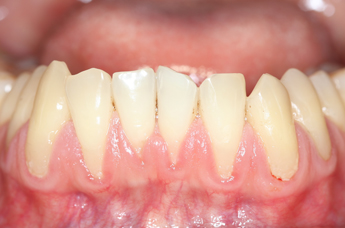
Unfortunately, gum tissue that has receded does not naturally grow back. The important thing is to identify why it has happened and stop it from progressing. In some cases, gum grafting procedures can improve areas of recession, but preventing further damage is always the priority. Early assessment gives you the best opportunity to protect both your gums and the teeth they support.
Healthy gums are pink, firm and quiet, although healthy pigmentation is entirely normal in many people. They do not bleed, ache or draw attention to themselves. Keep up a steady routine of brushing, cleaning between your teeth, sensible eating and regular dental check-ups, and your gums will continue doing their job without complaint for decades. If something does change, act early rather than waiting to see whether it clears up. Gum problems caught in their earliest stages are usually straightforward to reverse, while the same problems left untreated often become more difficult and more costly to manage.
If your gums are bleeding, swollen or tender, you may already have gingivitis. Read our guide to Gingivitis: Causes, Symptoms and Treatment Options to learn more.
Back to treatments